Christer Sjöberg
It All Started in Scandinavian Waters (1979 – Present)
When I first picked up a fly rod sometime in the mid-1970s, fly fishing was still a fairly uncommon activity in Sweden. The gear we had back then—glass fiber and spliced cane rods, clunky double-taper lines, and heavy, inefficient reels—left a lot to be desired. But even before I held a rod myself, I knew there was something magical about fly fishing. I felt it the moment I first saw it in action—it left me speechless.
To keep it short: I was spending a week in northern Sweden with my wife (I had somehow convinced her that hiking and fishing on the tundra was the perfect honeymoon). I’d been trying for over an hour to get a big trout to take my lure. I was using a spinning rod and had never even seen a fly rod before.
Out of nowhere, someone appeared along the riverbank. Keep in mind—we’d been dropped off by helicopter in the middle of nowhere and weren’t expecting to see another soul. This stranger sat down and watched me for a bit. We had a quick chat, and then he asked if he could give it a try. “Of course,” I said.
He pulled out a rod I didn’t recognize and started casting in a way I’d never seen. I was already confused—but that was nothing compared to what happened next. His tiny fly landed gently on the water, and the trout I’d been chasing for hours went straight for it. He landed the fish, said thank you, wished us a nice week, and disappeared upstream.
I stood there stunned, barely able to process what I’d just seen. From that moment, I knew I had to learn more about this style of fishing.
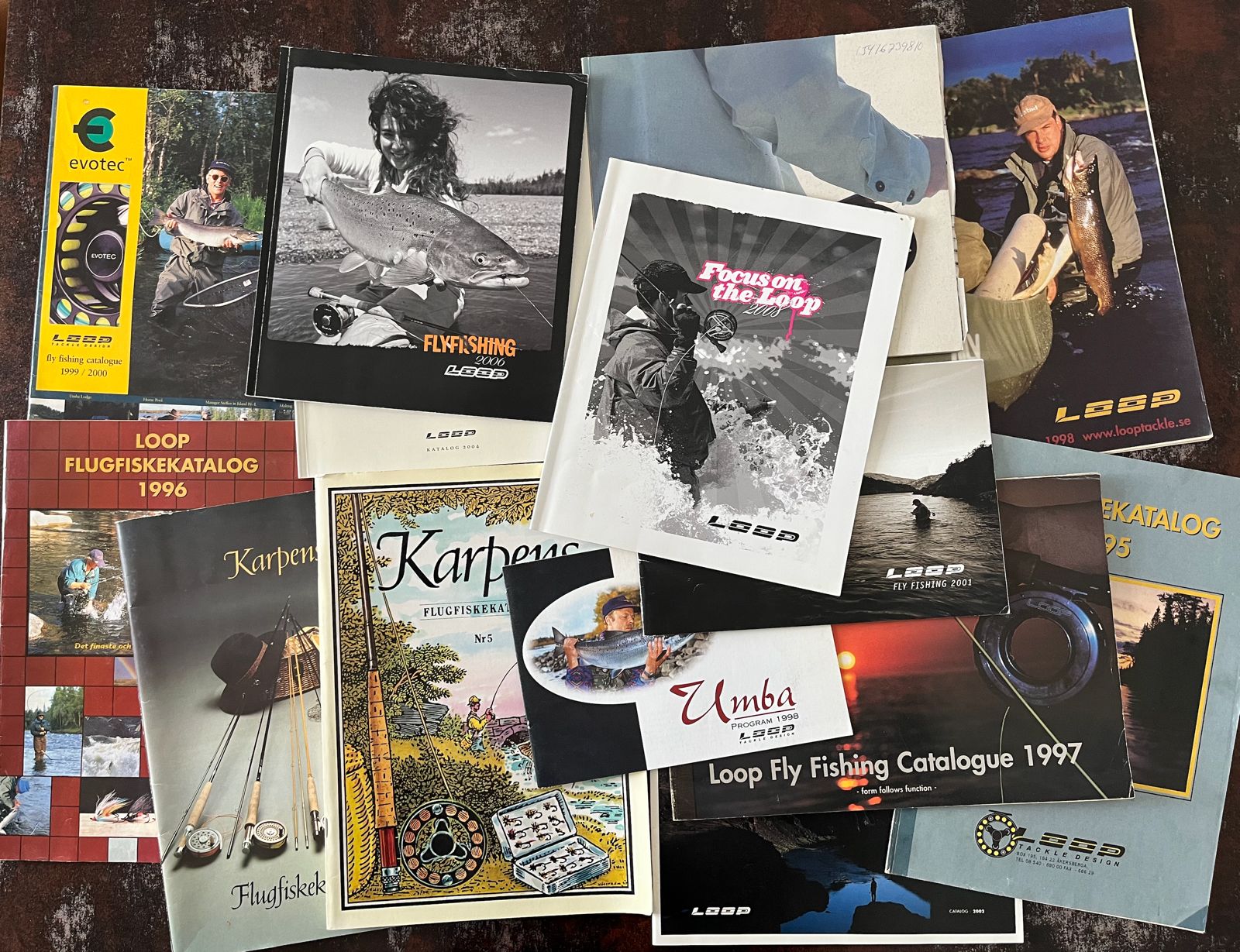
That experience lit a fire in me. In the early 1980s, a close friend and I opened a small fly fishing shop in Stockholm. We called it Karpens Fly Fishing. It began as a passion project, but it didn’t take long before we saw a bigger opportunity. We weren’t just interested in selling gear—we wanted to create it. We wanted to push boundaries.
So we rebranded as Loop Tackle Design, added Göran Andersson, today perhaps most known as the man who invented the underhand cast, to the team, and what started as a modest fly shop soon became a mission: to innovate and improve the way we fish. There was no strict business plan—just a deep love for the sport and a relentless drive to do things better.

Opening Doors with Sage
Our first big step came when we became agents for a young American rod company called Sage. At that time, they only made single-hand rods. But in Scandinavia and the UK, double-hand rods, or Spey rods, were an important part of the fly fishing scene that they had yet to figure out.
Myself and Göran Andersson,flew to the U.S. to work directly with Sage on developing their first Spey rods. That collaboration was a turning point, especially for European anglers. It helped Sage gain momentum internationally, outside of North America, and it laid the groundwork for much of what we would go on to create down the road.

Redefining the Fly Reel: The Large Arbor Revolution
While working on rods, I started thinking more about reels. Traditional fly reels had narrow spindles, making line retrieval painfully slow—especially with a strong fish on the run. The more line you had out, the more resistance you faced. It wasn’t uncommon to lose fish because of it.
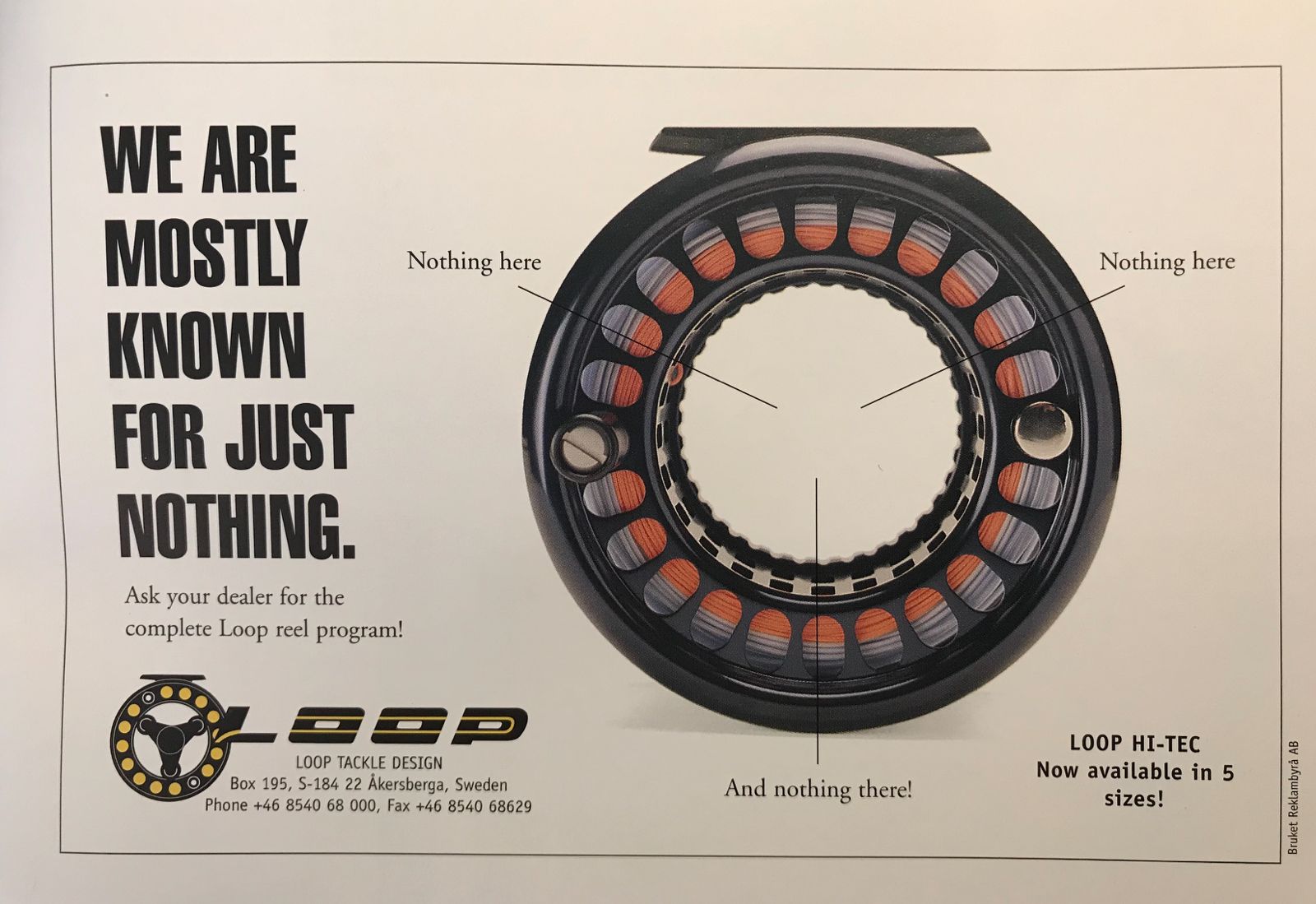
Then I met Kurt Danielsson, a Swedish innovator with a fresh reel design. Together with our team at Loop, we developed what would become the world’s first Large Arbor Reel. By increasing the spool diameter, we made line pickup up to five times more efficient and reduced drag pressure as the line peeled off.
It was a game-changer. Today, nearly every fly reel on the market is built around the Large Arbor concept we introduced. But at first, it didn’t go over well with everyone. Early reviews often praised the performance—then joked about how ugly it looked. It became a running theme: “If only it didn’t look so bad, this would be a phenomenal reel.” It was almost funny. At that time we weren’t designing for looks—we were solving real problems. And eventually, the rest of the industry caught up.
The Loop Rods: Building Our Legacy
By the mid-1980s, Sage had been sold to an investment group, and I knew it was time to build something truly our own. We wanted to design a line of rods from scratch, based on how we liked to fish.
Göran Andersson visited numerous factories around the world that were producing graphite rods for spin fishing and similar products, before we finally found a small manufacturer in Korea that had what we were looking for. At the time, they were mostly making low-end spinning rods—but they were the most eager to learn and open to new ideas. Perhaps because they were a smaller, newer player in the industry looking to make a name for themselves. I remember Göran calling me to let me know he had identified what he believed was the most promising producer, saying “They certainly don’t know how to build a fly rod - yet - but they’re by far the most willing to learn”.
It was a risk to go with a lesser-known factory instead of a big-name producer, but we wanted to do something different, and so we did.
It took three intense years and thousands of prototypes, but eventually, we launched the first Loop fly rods. People were skeptical at first—especially about Korean-made rods—but the performance spoke for itself. In time, even the biggest brands followed suit and today Korea is known as a premium fly rod supplier, using the latest machines, material, and know-how.
Scandi Style is Born: A New Way to Cast
Back then, Spey casting relied on long, double-taper lines and wide-open backcasts. It worked well in open spaces—but in tighter conditions, it was a nightmare.
So we started cutting those lines down, creating compact, controlled heads with running lines. It gave us more control, greater versatility, and required far less space.
Göran Andersson was the driving force in developing this new method. We eventually turned it into a factory-produced system: pre-looped shooting heads and running lines. We called it Underhand Casting, now known globally as Scandi Style. Today, it’s the dominant two-handed casting method around the world.

Solid Adventures: Searching for Untouched Waters
After years of fishing in Sweden and Norway with varying degrees of success—largely due to commercial overfishing and the heavy use of local nets—I started looking for something truly untouched. I wanted a place where if the fishing was slow, it was simply down to the whims of nature, not human interference.
In the early 1990s, Russia opened up to tourism. My fishing partner Johan and I saw an opportunity to explore the remote salmon rivers of the Kola Peninsula. In 1991, we made our first trip—and what we found was extraordinary.
From then on, we began bringing anglers to experience this pristine wilderness. For over 16 years, we ran what many considered the world’s finest Atlantic salmon programs. We established and operated legendary destinations like Umba, Kharlovka, Rynda, Pournach, and Yokanga, hosting around 500 anglers each summer on the Kola Peninsula. The stories from that era could fill a book—some almost too wild to believe. In the early 2000s, I moved on from my final program on Kola to focus on a new part of the world, southern Patagonia
I first discovered Estancia Las Buitreras on the Rio Gallegos in 2002. A piece of heaven if you ask me, offering some of the most interesting fishing I’ve encountered. Today it’s widely accepted as one of the premier destinations for sea-run Brown Trout in the world. At the same time we were launching programs in Cuba, an amazing fishery at the time for Tarpon, Bonefish, and Permit. Today Cuba is a well known and established destination for fly anglers from all over the world, but back then it was virgin. In 2006 we came across a place called Lago Strobel by pure luck, a lake in the middle of nowhere in Argentina, and we decided to name the operation Jurassic Lake. We ran it from 2006 to 2011 when we sold the program and moved on. Since then, we have launched programs in Greenland, Indonesia, India, and Papua New Guinea—always with the same goal: to fish and protect wild, unspoiled fisheries and share the experience with passionate anglers.
Innovation Never Stops: What We Introduced Through Loop
Over the years, the team at Loop helped push the sport forward with a number of industry firsts:
Neoprene waders
Ventilated waders
Interchangeable shooting head systems - Scandi Style
Balanced reel seats
Precision graphite disc drag systems
Countless small innovations that just made fly fishing simpler and more effective
Large Arbor reels


Solid Tackle: Where Passion Meets Precision
About four years ago, I reached out to a few of the most talented people I’ve worked with:
Steingrimur Einarsson – Engineer and founder of Einarsson Fly Reels
Tomas Ögren – The designer behind Loop’s most successful rods, reels, and lines (2006–2016)
David Moore – The mind behind innovations like the balanced reel seat
Rickard Sjöberg – Guide, destination scout, and operations manager at Solid Adventures
Felix Hansvencl - Guide, destination scout, photographer, and destination developer at Solid Adventures
Together, we bring over 100 years of combined experience. Our goal? To create high performance tackle that makes fly fishing easier, more enjoyable, and more rewarding, no matter your skill level. And on top that, tackle that you can really trust in any and all conditions.
Welcome to the Future of Fly Fishing
From humble beginnings in Sweden to helping shape how the world casts today, my journey has always been about one thing: moving the sport forward.
Solid Tackle is the next step—rooted in experience, driven by innovation, and built with a deep love for fly fishing.
With an extraordinary team and insights from the guides and scouts at Solid Adventures, we’re setting out once again to raise the bar. Our mission is simple: make fly fishing more accessible, more intuitive, and more rewarding.
Welcome to the future of fly fishing.
Welcome to Solid Tackle.
Thanks for being part of the journey.
Christer Sjöberg
Founder,
Solid Adventures & Solid Tackle